Saturday, March 30, 2024

Week Twelve Prompt Response


Author: Evette Dionne
Title: Weightless
Genre: Nonfiction (essay collection)
Publication Date: 2022
Number of Pages: 245
Geographical Setting: New York City
Time Period: Present Day

1. Where is the book on the narrative continuum?
Highly narrative (reads like fiction)


2. What is the subject of the book?
Weightless explores the intersection of the fat, Black, and chronically ill experience, through the lens of the highs and lows of Dionne's life.


3. What type of book is it?
This book is a collection of essays on different topics. The essays include tidbits from Dionne's personal life that highlight her persuasive argument.


4. Articulate appeal:

  • Pacing: The pacing is leisurely and reflective. There are moments of tension, but we know at the onset that Evette is at a greater place of acceptance with her body and life than at the lowest times of her life.
  • Characters: The book is autobiographical and follows Evette's journey with chronic illness and fatness, interlaced with her Black identity. Evette manages several chronic conditions, including mental illness (especially agoraphobia), heart failure, and pulmonary hypertension. Evette is able to reflect on her perspective at different times of her life with clarity and stark honesty. She does now shy away from condemning her past actions as self-destructive, harmful to others, or weak. Evette's supportive family also play a role, as do various boyfriends, though they serve more as representatives of the effect of Evette's mindset on others and as stand-ins for society than actual charactesr with arcs.
  • How does the story feel? The story feels as if you are reading journal entries.
  • What is the intent of the author? Dionne's intent is to share her lived experience and to build community with readers like herself. The book can also function as a long persuasive argument that fatness is not a morally corrupt state of being, but rather a neutral fact of life that deserves accommodation. Dionne argues that fatness should not be overly medicalized, and that doctors should not default to diagnosing a patient with simply "fat" and not further investigate their health conditions.
  • Does the language matter? The langauge matters less than the emotional resonancy of the material. Dionne's prose is not overly poetic, but it does strike a chord narratively.
  • Is the setting important and well described? The setting is sparesely described and is perhaps beyond tertiary to the overall structure of the book. Dionne's interactions with others take center stage, and whether she is talking to another disengaged boyfriend on a city street, in a park, or in a club is irrelevant.
  • Are there details and, if so, of what? Dionne shares lot of medical details about her various chronic illnesses. These serve to illustrate that Dionne's primary heath problem is not her weight, but rather the illnesses she was predisposed to and got by seemingly random chance. Dionne also shares startlingly emotional and thought patterns that would potentially isolate her from the body positive movement, but she does so with honesty and bravery.
  • Are there sufficient charts and other graphic materials? There are no graphs, but the book didn't need them.
  • Does the book stress moments of learning, understanding, or experience? This book stresses understanding and experience. Dionne grows to accept herself and her place in society, but also elicits a call to action to challenge the status quo of white supremacy, capitalism, and the thin ideal. 

5. Why would a reader enjoy this book (rank appeal)?

  1. Body positivity
  2. Black lived experience
  3. Social commentary


References: 

Dionne, E. (2022). Weightless. New York: HarperCollins.

Nonfiction: The Right to Be Cold by Sheila Watt-Cloutier


Author: Sheila Watt-Cloutier
Title: The Right to Be Cold
Genre: Nonfiction (memoir)
Publication Date: 2015
Number of Pages: 337
Geographical Setting: Canada, both in villages like Kuujjuaq and in the southern cities
Time Period: 1953-2015 

Summary: Sheila Watt-Cloutier tells her life's story as an Inuit woman driven to preserve the traditional lifestyle she had as a child. Watt-Cloutier opens her memoir with vignettes from her childhood, ranging from traveling by dog sled to being sent to a residential school in Churchill. Watt-Cloutier is separated from her childhood home of Kuujuaq for a time, and upon her return discovers countless detrimental changes to her village. The dog sled teams have been replaced by snow mobiles, alcoholism, violence, and disease plague her beloved village. Watt-Cloutier changes the trajectory of her life to be one of cultural renaissance, leading many initiatives to safeguard the way of life of the circumpolar Indigenous peoples. 

Watt-Cloutier tackles every topic with nuance and integrity, opening the door for multiple interpretations of events. She discusses how her white-passing appearance perhaps enabled her to be a more palatable voice for her people to the white power majority, but how this also at times affected her self-perception of her identity. Another such example is Watt-Cloutier's shunning by environmental NGOs like Greenpeace and the World Wildlife Fund, even though all three had the goal of stopping climate change. Watt-Cloutier attributed this to the popular movements against hunting of Arctic wildlife, which was at odds with her people's subsistence hunting relationship with their land. Other divisive topics she tackles are the white father who abandoned her family, intra-community debates on how to adapt to a changing world, education, and drug abuse.

Subject Headings (per Novelist):
  • Climate change
  • Environmental protection
  • Environmentalists
  • Inuit women
  • Watt-Cloutier, Sheila
  • Weather
Nonfiction Appeals:

Characterization - "Nonfiction characters tend either to be quickly defined and remain relatively constant or to be slowly revealed as they develop over the life of the story" (Wyatt, 2007).

    Watt-Cloutier comes into her own as a politician and change-maker throughout the book. She initially is somewhat adrift in terms of what she envisions her life's mission to be; at first, she dreams of becoming a doctor, but her grades don't allow it. She tries her hand in education but faces too much friction with her co-workers. Eventually, several chance meetings allow her an avenue into politics, where she quickly becomes globally recognized. An introvert at heart, being thrust into the spotlight is hard for Watt-Cloutier, and she faces several personal tragedies as she grows older. Several family members die in quick succession, and her marriage falls apart. Nonetheless, Watt-Cloutier describes herself as having found clarity and resonance in the work she does. 

Story Line and Subject - "Story line provides a place in the appeal construct to consider how the subject is approached" (Wyatt, 2007).

    As Watt-Cloutier realizes the depth of the suffering ravaging her childhood home, the reader comes to this conclusion alongside her. It hits with the needed impact to provide the emotional connection needed to invest in Watt-Cloutier's viewpoint and ideology. When she learns of a new way that climate change has impacted her people, we as readers are devastated alongside her. This is reflective in a meta way of Watt-Cloutier's strategy of appealing the political elite of the globe to understand the human cost of climate change felt foremost and strongest by Indigenous communities.

Detail - "Details are the canvas on which the book is set; they bring out a richness in the book and create a backdrop to the reading experience" (Wyatt, 2007).

    This book is laden with details both cultural and personal. Many words in Watt-Cloutier's native Inuktitut language are introduced and then used in place of the English the rest of the text is written in. Watt-Cloutier includes information about other Indigenous human rights movements happening concurrently with her tenure in office, such as those by Amazonian Indigenous populations and by Samoans. This adds to the feel of this being a a truly global movement that Watt-Cloutier was a part of, and adds to the gravitational feel of the book. It made it feel like a revolution. Which, of course, is exactly how Watt-Cloutier aimed to frame it.

Three terms that best describe this book:
  • Memoir
  • Cultural history
  • Emotional
Nonfiction Read-alikes:


Braiding Sweetgrass by Robin Wall Kimmerer

Kimmerer, R. W. (2013) Braiding sweetgrass. Minneapolis: Milkweed Editions.

Common appeals: Indigenous knowledge, environmentalism, human interactions with the environment


The Archipelago of Hope by Gleb Raygorodetsky

Raygorodetsky, G. (2017). The archipelago of hope. New York: Pegasus Books.

Common appeals: Indigenous knowledge, Canadian literature, climate change


Storms of My Grandchildren by James Hansen

Hansen, J. (2020). Storms of my grandchildren. New York: Bloomsbury.

Common appeals: Climate change, environmentalism, call to action

Fiction Read-alikes:


Yellow Earth by John Sayles

Sayles, J. (2020). Yellow earth. Chicago: Haymarket Books.

Common appeals: Community activism, Indigenous land, pollution


The Book of Rain by Thomas Wharton

Wharton, T. (2023). The book of rain. Toronto: Random House Canada.

Common appeals: Pollution, Canadian literature, humans and nature


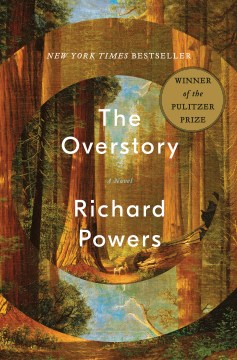
The Overstory by Richard Powers

Powers, R. (2018) The overstory. New York: W. W. Norton & Co.

Common appeals: Environmentalism, humans and nature, women activists

References 

Watt-Cloutier, S. (2015). The right to be cold. Toronto: Penguin Canada Books.

Wyatt, N. (2007). The readers' advisory guide to nonfiction. American Library Association.

Wednesday, March 20, 2024

Week Eleven Prompt Response

Audiobooks and ebooks are really important for broader accessibility. Being able to listen to a book, while of course being convenient on long drives or otherwise on the go, is also amazing for those with low vision. Some of the most avid users of ebooks at my previous branch were senior patrons who needed the flexibility to make the text larger. My library system has a robust collection of ebooks and eaudiobooks on Libby and Hoopla; unfortunately, I feel like we struggle to entice patrons with no natural interest in this medium to give it a try, and I put in a lot of collection development requests for physical copies of books we have digitally. 

I think print books have a kind of hidden appeal factor we don't often talk about; the physical appearance of the book. Books with sprayed edges are super popular right now (see A Fate Inked in Blood, Gothikana, or Sanctuary of the Shadow). The font choice, cover design, and intangible feel of the book can lead someone to pick it up and take it home. Ebooks sacrifice this appeal to gain flexibility. Some patrons in our service area own property locally but travel a lot or move to Florida during the winter, and they will use our Libby from afar while they are out of town. 

The effectiveness of a narrator in an audiobook cannot be overemphasized in terms of appeal. Many of my coworkers have been reading the A Court of Thorns and Roses series. One coworker listened to the dramatized audiobook for all the books, and found herself not enjoying one of the main characters because she found that narrator annoying, and it affected her overall enjoyment of the books. Additionally, I have seen some people in my romantasy Facebook group discussing deleting certain audiobook downloads from their devices without ever listening to them because the narrator was found out to be predatory towards his fans. (Imagine being that author and having someone so beyond your control negatively impact your work!). 

Overall, ebooks and audiobooks are an essential, valued form of reading and storytelling that make reading accessible to more people. Some purists will argue that the only reading that counts is reading a print book, but I couldn't disagree more. 

Sunday, March 10, 2024

Book Club Experience

This semester I attended my library system's book club "Books on Tap." This is a more informal book club kind of similar Professor Cataldi's Stout Stories as the meetings take place at restaurants and have a focus on being able to drink recreationally while discussing books. Unlike Stout Stories, Books on Tap does not require or even ask patrons to read a specific book before attending. Rather, patrons (and the librarians who attend) are given a question pertaining to reading to discuss. Librarians bring ARCs that have been sent to the library for patrons to optionally take home. Books on Tap is advertised on my library's website, Facebook, and also via a Facebook group and email mailing list.

When I attended Books on Tap, I invited my best friend. I helped the librarians who regularly run Books on Tap set up, as I was also there to learn how to moderate the club should there ever be an emergency. Those librarians had already arranged with the restaurant for us to have a table in the back of the room, cut off from the main dining area by a partial wall. We spread the ARCs that Collection Development had given us around the table for patrons to look at and choose from when they arrived. Patrons were allowed to take multiple ARCs as we receive so many it is, quite candidly, a great way for us as a library to get use out of the ARCs and also not to accumulate too many. 

Patrons started to arrive. Eventually, the table was completely full. There were probably around 15 patrons, plus myself and the two librarians who usually run Books on Tap. There was a staff member there who was attending as a patron to socialize. All were women. One of the regular librarians gave a small introduction welcoming everyone to Books on Tap and sharing this week's question: "What are your reading goals for the year?" This question was discussed briefly, then patrons quickly transitioned to talking amongst themselves and with staff about what they were reading, ordering food and drinks, and welcoming someone to the group that hadn't attended before.

I talked at length with my best friend and the staff member who had attended on a social level about the book I was currently reading, The Only Good Indians, as she had also read it. I asked those sitting near me if they had to give birth to animal that was not a human, what would it be? (This was because of a plot point in The Only Good Indians and succeeded in amusing those who had read the book, but those who hadn't, like my best friend, were just grossed out. Whoops!). I also talked with those near me about reading preferences, the ARCs that had been brought, and about other things going on in the city. My best friend realized someone in the club knew her mother, and it became a moment of "oh you know this person? So do I!" for all of my best friend's family friends.

Books on Tap had a warm atmosphere and, in many ways, is most aptly characterized as a social club bolstered by a shared love for reading by the participants. I intend this to be read as glowing praise! We are experiencing an epidemic of loneliness in our society and an influx of artificial, stilted connections with others. Ironically, as I'm writing this post, I recall a TikTok I saw this month posted by the user @starsandthecosmos. I could not find the original post as this user posts multiple times a day. Regardless, this user discussed the epidemic of loneliness in our society and how clubs and social gatherings advertising "come here and make friends!" can often fall short of meeting that goal. They framed this as a heightening of expectations and an increased chance for participants to feel like they "failed" if they don't walk away from the experience feeling like they made authentic connections. Rather, an event advertising an activity or shared interest, like Books on Tap, is more successful at creating genuine connections between community members since there is that foundation of shared interest. 

I hope my personal schedule lightens up a bit so I can attend Books on Tap again soon!

Saturday, March 2, 2024

Special Topics Paper Summary

I wrote my special topics paper about book influencers. More specifically, I discussed BookTok, since it is undoubtedly the most powerful. I approached the topic from the perspective of a reader and as a wannabe author. I established in my first section that BookTok is a powerful force coveted by publishing houses, but that they are unable to truly replicate. I accredited this to the inability of those trying to sell a product to replicate a user's genuine joy regarding that product. Someone gushing about their favorite book is going to describe it sloppily and not use the "proper terms"; but that makes their review all the more appealing to a layperson. As a librarian, I love Kirkus, but I get book recommendations for books I truly want to read from my friends or those with similar taste to me, not from faceless reviewers I don't actually know. Even if I only "know" these influencers in a parasocial sense.

In my second section I discussed some of the divisions within the BookTok community. For instance, its detractors will try to argue that if someone reads hundreds of books a year and does not remember the fine details, that book either can't have been all that great, or the reader in question is not truly absorbing the content of the book. Personally, I don't think everyone has to read highbrow literary fiction all the time, or come away from each reading experience ready to write a five paragraph essay. I do believe diversity in thought and in voice is important, but I don't think all our recreational time should be spent enriching ourselves. Sometimes I think reading for pleasure is needed and acceptable. Constant self-improvement feels capitalist in a way I don't want it to.

In my third section, I talked about how authors feel pressured to have a presence on BookTok because of its power to catapult an author's career into the stratosphere. In lots of my online writers' groups, people complain about the "unearned" success of authors like Colleen Hoover, Sarah J. Maas, and Tessa Bailey, because these unpublished authors feel their books are better than these famous women's. (Yes, I do find these viewpoints often coming from men critical of romance as a genre, but I did not directly touch on that in my paper as it was anecdotal at best). To that end, I encouraged prospective debut authors not to put all their eggs into one basket and to instead send out lots of ARCs to generate genuine enthusiasm and love for their books. 

Friday, February 23, 2024

Week Seven Prompt Response

Now more than ever, public figures like authors have an expectation of adherence to popular political thought. Celebrities that express problematic viewpoints, on either side of the political spectrum, can have their potential for future brand deals, acting jobs, hosting award shows, wiped away by a single irreverent Tweet or off-color remark. To an extent, this does result in the necessary ousting of bigots from positions of power. If I as a viewer, reader, or listener learn that the artist who produced that piece of media is a racist, homophobe, xenophobe, Zionist, or otherwise, I would not personally want to monetarily support their work. Is it true that people with horrible views can make compelling, beautiful art? Of course. Look no further than the controversy surrounding passionate Harry Potter fans who have divorced the work in their minds from J. K. Rowling's vocal criticism of trans women. 

However, this cancel culture can often be at odds with empathy--but not in the way the political right often portrays it. Freedom of speech is essential for a democracy--but that doesn't mean everyone has to like what you say. If I were to choose not to buy any more Harry Potter merchandise because of J. K. Rowling's views, even though I loved the series, that is the "consequence" of Rowling's actions. This strong desire to champion the causes of the marginalized can lead to bad faith takes. If I read a social media post or hear a sound bite of someone saying something that's not politically correct, I don't think my first assumption should be that the individual is a bigot. (Unless, of course, the statement is blatant). Someone not using precisely the right language to describe a situation, or speaking on a situation without full context, might be simply unaware of the harm they are doing. Public outcry and the assumption of purposeful cruelty on the part of the offender should not happen. If someone makes a harmful statement, they should be given the tools to educate themselves before public opinion damns them forevermore.

Of course, there are power imbalances at play here, as there are everywhere.

Sometimes, people with genuinely hateful platforms are given a voice. One such case was that of Milo Yiannopoulos' book deal with an imprint of Simon & Schuster, one of the most powerful publishing houses. In our culture of hyper-visible celebrities, fans will pressure their favorites to state their opinion on everything from trans rights, gun reform, Black Lives Matter, and the genocide taking place in Gaza. (I have personally seen many viral TikToks informing other readers of authors who have been "silent" on various causes, and how they should no longer be supported). As Roxane Gay stated after she pulled her own book deal with Simon & Schuster as a result of them amplifying Yiannopoulos' bigoted voice, "...Not everyone [can afford to take this stand]. Remember that" (O'Brien, 2017).  

Certainly, many authors debuting with Simon & Schuster in 2017 may have had strong objections to Yiannopoulos' book deal. Yet, they had just landed a book deal with a Big Five publishing house. They were on the cusp of perhaps being able to follow a dream of writing for a living. Speaking out against this book deal could have stomped those publishing hopes into the dirt. Of course, BIPOC writers who have had to work the hardest to secure a book deal in the first place, would be hurt the most by speaking out against their publisher. As someone with aspirations of traditional publishing myself, I cannot imagine the anguish. 

We turn to celebrities to speak out against injustice on our behalf. As those with the most power, money, and influence, they can be igniters of cultural change, or champions of the status quo. We yearn to see our own views and hopes reflected in them. Too often, they let us down. As librarians, we are privy to the opinion of the common man more than those who are "chronically online." We owe it to our patrons to understand these nuances and to honor patrons' personal choices when it comes to the literature they consume. What is important to us may not be important to a patron, and vice versa. 

References

O'Brien, Sara Ashley. (2017). 'Bad Feminist' author Roxane Gay pulls book deal over Milo Yiannopoulos.     CNN Business. https://money.cnn.com/2017/01/25/technology/roxane-gay-simon-schuster-milo-                yiannopoulos/

Tuesday, February 13, 2024

Science Fiction: This Is How You Lose the Time War by Amal El-Mohtar & Max Gladstone


Author: Amal El-Mohtar & Max Gladstone
Title: This Is How You Lose the Time War
Genre: Intellect (Science Fiction)
Publication Date: 2019
Number of Pages: 198
Geographical Setting/Time Period: myriad landscapes, planets, and time periods both past and future

Plot Summary: Red and Blue are time-traveling agents on either sides of a conflict, each trying to mold the future their superiors envision into being. Red belongs to a technoscape, and many of her body parts have been replaced by machinery. Blue hails from an ecoscape, grown and nurtured like a prized, lethal plant. The agents circle each other for the millennia, undoing each other's work and finding beauty and meaning in the struggle and tactics of their opponent. 

Blue reaches out to Red, and the her answering letter begins a series of correspondence that draws the two women closer and closer together until their handiwork is all over each other time threads. Messages are left behind in plants, on bodies, in the literature of famous writers. As their feelings for each other grow, they are forced to hide their love from those in control. With nearly omnipotent superiors and the curious idiosyncrasies of time travel, their love could be doomed, predestined, or something else entirely.

Subject Headings (per Novelist):
  • Competition
  • Enemies
  • High technology
  • Imaginary wars and battles
  • Letter writing
  • Romantic love
  • Secrets
  • Space and time
  • Time travel
Science Fiction Appeals: 

Characterization - "Although attention is paid to characterization at the more literary end of the genre, generally the issues, story, and frame are given greater attention than the creation of dimensional, fully realized characters" (Wyatt & Saricks, 2019).

    This Is How You Lose the Time War has a memorable, rip-your-heart-out story and dilemma. Are beings created as a means to an end entitled to make their own decisions about their future? If you're able to prevent death by going into the past to change the future--what happened to the you that died in another thread of time? Red and Blue's courtship and romance grapples with these questions, but their individual personalities are not necessarily well understood. This is partly a by-product of the formatting of this book, as it mostly takes places within letters Red and Blue write to each other. We know that Red is rash, and Blue is more artistic. We can inform they are somewhat erudite as they discuss literature together. However, we don't really see them interact in person within the core timeline. This does not hinder the story, but rather empowers the narrative to the ride full-force towards the ethical dilemmas.

Frame/Setting - "Science Fiction is consistently evocative and visual" (Wyatt & Saricks, 2019).
   
    The prose in this novel is lush. The details are precise and vivid, even though we leap as readers between space and time frequently. The night-describable presence of these details allows the reader to craft vast landscapes in their mind's eyes, creating a visual for Red's Agency and Blue's Garden even though we don't get a thorough tour. This individual title trends literary, and is in some ways more of a soft sci-fi than a hard one. There are few, if any, technical explanations on how the time travel works or how it came about. We don't get steep worldbuilding or complicated societal structures. We bask instead in the love story made possible through time travel, rather than in the time travel itself.

Time Travel/Alternate History - "They offer the pleasures of speculation--of what the future may hold and how such travel may be possible--as well as the fascination of the past, mixed with the thought-provoking and mind-expanding possibilities of differing worlds" (Wyatt & Saricks, 2019).

    This is firmly a time travel novel. Red and Blue remake worlds with an eye towards the Agency or Garden's goals. These are presented as sweeping, inviting possibilities, but also impossibilities; Red and Blue are both thousands of years old, often staying in a particular thread of time for a dozen or more years to cement their place in a movement or to be in the right place at the right time. Red and Blue are more often to be the catalyst than the cause; they could give a revolutionary piece of literature to someone who becomes a great leader influenced by that work handed to them by a trusted friend. In many ways, while this novel has few concrete scenes "anchoring" it and feels rather abstract, we do get a lovely birds-eye view of how history's trajectory can be altered by one person, be they a time traveler or an everyday commoner.

Three terms that best describe this book:
  • Literary
  • Romantic
  • Complex
Fiction Read-alikes:


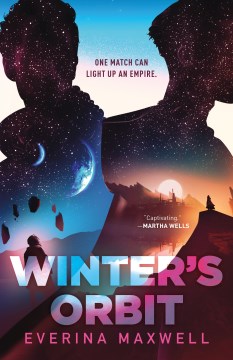
Winter's Orbit by Everina Maxwell

Maxwell, E. (2021). Winter's orbit. New York: Tor.

Common appeals: Romantic, queer, intensifying, compelling


The Future of Another Timeline by Annalee Newitz

Newitz, A. (2019). The future of another timeline. New York: Tor.

Common appeals: Time travel, female characters, intricate


The Time Traveler's Wife by Audrey Niffenegger

Niffenegger, A. (2002). The time traveler's wife. San Francisco: MacAdam/Cage Pub.

Common appeals: Time travel, literary, romantic, moving

Nonfiction Read-alikes:


A Brief History of Time by Stephen Hawking

Hawking, S. (1998). A brief history of time. New York: Random House Publishing Group.

Common appeals: Theoretical discussion, possibilities, parallel dimensions


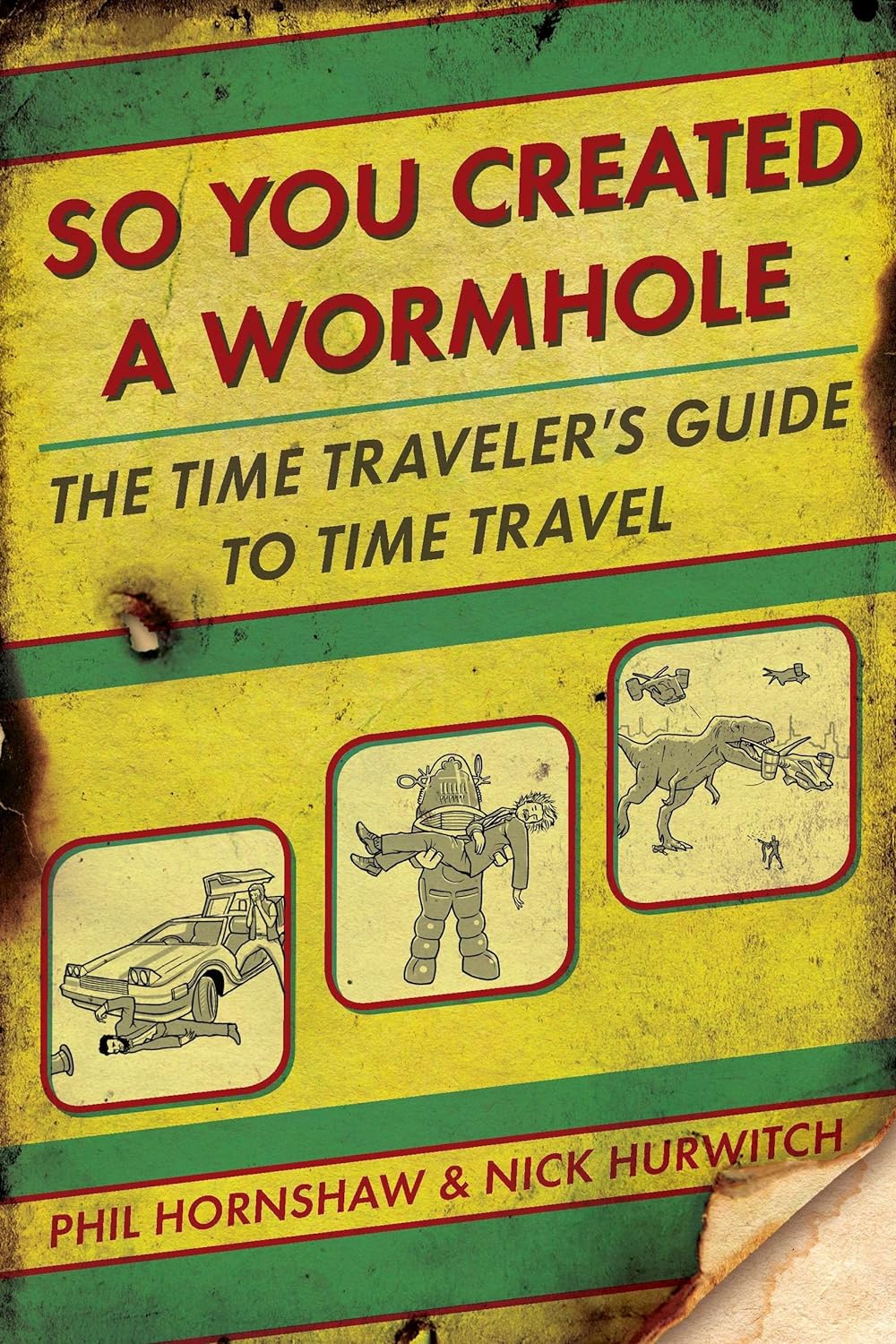
So You Created a Wormhole by Phil Hornshaw & Nick Hurwitch

Hornshaw, P., & Hurwitch, N. (2012). So you created a wormwhole. New York: Berkley

Common appeals: Time travel, physics, possibilities


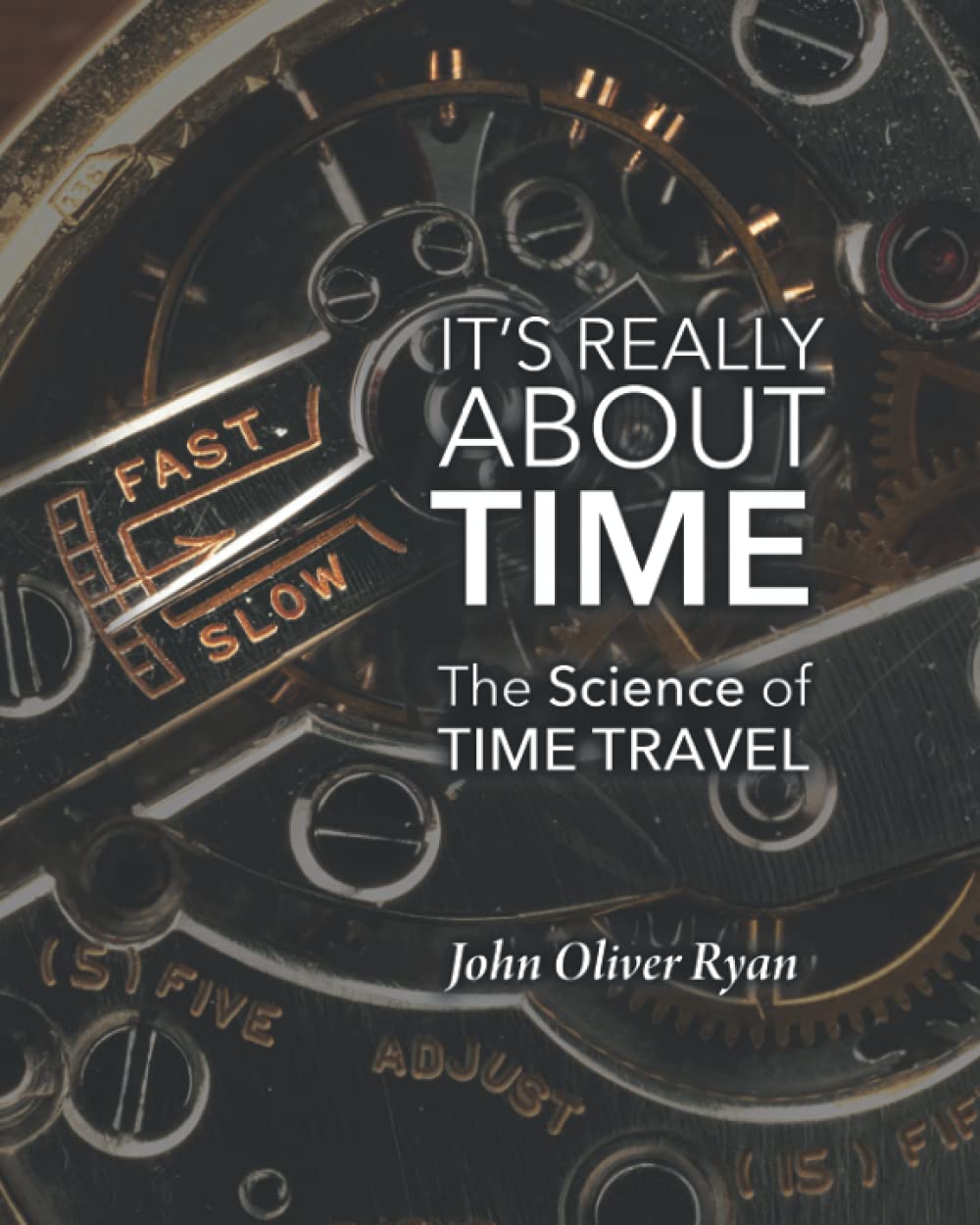
It's Really About Time by John Oliver Ryan

Ryan, J. O. (2019). It's really about time. Tahilla Press.

Common appeals: Time travel, physics, possibilities

References

El-Mohtar, A., & Gladstone, M. (2020). This is how you lose the time war. New York: Saga Press.

Wyatt, N., & Saricks, J. G. (2019). The readers' advisory guide to genre fiction. American Library Association.

Week Fifteen Prompt Response

Three ways that we promote our collection at my library are the following:  1. Themed book lists. I'm pretty sure every library under th...