Monday, April 15, 2024
Week Fifteen Prompt Response
Week Fourteen Prompt Response
If I were tasked with the decision whether to separate urban fiction and LGBTQ fiction from more generalized fiction, I would be in favor of separating urban but not LGBTQ fiction. Urban fiction describes a specific genre with its own conventions and expectations. Patrons looking for urban fiction will have a better browsing experience if all of the urban fiction is in one place. This is what my library actually has done; we have our own well-loved urban shelves at our main branch. I can understand why some would fear this being seen as discriminatory; however, I think it would actually decrease patron access and circulation to have the urban books spread throughout general fiction.
Conversely, with LGBTQ fiction, I don't feel that should be a separate section as LGBTQ fiction is less of a genre and more of a theme or appeal factor. While urban fiction also has common thematic threads of life in the inner city, poverty, violence, exploitation, and "rags to riches" storylines, the books are more strongly united stylistically. This is apparent from title conventions, cover presentation, and lyricism of the text. This unites urban/"street lit" as a genre, whereas LGBTQ fiction, as of yet, does not have a unified "feel" the way genres do. LGBTQ fiction certainly can share thematic elements, e.g. feeling "othered", coming out, found family, and beyond, yet, these works tend to feel stylistically distinct and can transcend genre. LGBTQ is not a genre that should be separated from general fiction as that does not improve the patron browsing experience. Separating LGBTQ as a genre also bows to censorship efforts, which libraries seek to combat.
However, I would support pop up displays highlighting both urban fiction, LGBTQ fiction, and urban LGBTQ fiction to increase circulation and patron awareness of these titles.
I would make these decisions because:
1. Condensing urban fiction together will make for a better browsing experience for lovers of the urban genre, same as with science fiction or Western readers.
2. Separating LGBTQ fiction from general fiction bows to censorship efforts and the suppression of marginalized voices in a way that separating urban fiction does not. LGBTQ fiction also does not have a cohesive feel the way urban lit can.
3. If urban readers feel othered by the separating of their genre from general fiction and do not find the action to enhance their browsing experience, we could instead indicate via spine label that a title is urban and return it to the general fiction stacks.
Monday, April 8, 2024
Diverse Read: You Made a Fool of Death with Your Beauty by Akwaeke Emezi
- Grief
- Healing
- Love triangles
- May-December romance
- Self-discovery
- Lush
- Emotional
- Moving
Saturday, March 30, 2024
Week Twelve Prompt Response
- Pacing: The pacing is leisurely and reflective. There are moments of tension, but we know at the onset that Evette is at a greater place of acceptance with her body and life than at the lowest times of her life.
- Characters: The book is autobiographical and follows Evette's journey with chronic illness and fatness, interlaced with her Black identity. Evette manages several chronic conditions, including mental illness (especially agoraphobia), heart failure, and pulmonary hypertension. Evette is able to reflect on her perspective at different times of her life with clarity and stark honesty. She does now shy away from condemning her past actions as self-destructive, harmful to others, or weak. Evette's supportive family also play a role, as do various boyfriends, though they serve more as representatives of the effect of Evette's mindset on others and as stand-ins for society than actual charactesr with arcs.
- How does the story feel? The story feels as if you are reading journal entries.
- What is the intent of the author? Dionne's intent is to share her lived experience and to build community with readers like herself. The book can also function as a long persuasive argument that fatness is not a morally corrupt state of being, but rather a neutral fact of life that deserves accommodation. Dionne argues that fatness should not be overly medicalized, and that doctors should not default to diagnosing a patient with simply "fat" and not further investigate their health conditions.
- Does the language matter? The langauge matters less than the emotional resonancy of the material. Dionne's prose is not overly poetic, but it does strike a chord narratively.
- Is the setting important and well described? The setting is sparesely described and is perhaps beyond tertiary to the overall structure of the book. Dionne's interactions with others take center stage, and whether she is talking to another disengaged boyfriend on a city street, in a park, or in a club is irrelevant.
- Are there details and, if so, of what? Dionne shares lot of medical details about her various chronic illnesses. These serve to illustrate that Dionne's primary heath problem is not her weight, but rather the illnesses she was predisposed to and got by seemingly random chance. Dionne also shares startlingly emotional and thought patterns that would potentially isolate her from the body positive movement, but she does so with honesty and bravery.
- Are there sufficient charts and other graphic materials? There are no graphs, but the book didn't need them.
- Does the book stress moments of learning, understanding, or experience? This book stresses understanding and experience. Dionne grows to accept herself and her place in society, but also elicits a call to action to challenge the status quo of white supremacy, capitalism, and the thin ideal.
- Body positivity
- Black lived experience
- Social commentary
Nonfiction: The Right to Be Cold by Sheila Watt-Cloutier
- Climate change
- Environmental protection
- Environmentalists
- Inuit women
- Watt-Cloutier, Sheila
- Weather
- Memoir
- Cultural history
- Emotional
Wednesday, March 20, 2024
Week Eleven Prompt Response
Audiobooks and ebooks are really important for broader accessibility. Being able to listen to a book, while of course being convenient on long drives or otherwise on the go, is also amazing for those with low vision. Some of the most avid users of ebooks at my previous branch were senior patrons who needed the flexibility to make the text larger. My library system has a robust collection of ebooks and eaudiobooks on Libby and Hoopla; unfortunately, I feel like we struggle to entice patrons with no natural interest in this medium to give it a try, and I put in a lot of collection development requests for physical copies of books we have digitally.
I think print books have a kind of hidden appeal factor we don't often talk about; the physical appearance of the book. Books with sprayed edges are super popular right now (see A Fate Inked in Blood, Gothikana, or Sanctuary of the Shadow). The font choice, cover design, and intangible feel of the book can lead someone to pick it up and take it home. Ebooks sacrifice this appeal to gain flexibility. Some patrons in our service area own property locally but travel a lot or move to Florida during the winter, and they will use our Libby from afar while they are out of town.
The effectiveness of a narrator in an audiobook cannot be overemphasized in terms of appeal. Many of my coworkers have been reading the A Court of Thorns and Roses series. One coworker listened to the dramatized audiobook for all the books, and found herself not enjoying one of the main characters because she found that narrator annoying, and it affected her overall enjoyment of the books. Additionally, I have seen some people in my romantasy Facebook group discussing deleting certain audiobook downloads from their devices without ever listening to them because the narrator was found out to be predatory towards his fans. (Imagine being that author and having someone so beyond your control negatively impact your work!).
Overall, ebooks and audiobooks are an essential, valued form of reading and storytelling that make reading accessible to more people. Some purists will argue that the only reading that counts is reading a print book, but I couldn't disagree more.
Sunday, March 10, 2024
Book Club Experience
Saturday, March 2, 2024
Special Topics Paper Summary
I wrote my special topics paper about book influencers. More specifically, I discussed BookTok, since it is undoubtedly the most powerful. I approached the topic from the perspective of a reader and as a wannabe author. I established in my first section that BookTok is a powerful force coveted by publishing houses, but that they are unable to truly replicate. I accredited this to the inability of those trying to sell a product to replicate a user's genuine joy regarding that product. Someone gushing about their favorite book is going to describe it sloppily and not use the "proper terms"; but that makes their review all the more appealing to a layperson. As a librarian, I love Kirkus, but I get book recommendations for books I truly want to read from my friends or those with similar taste to me, not from faceless reviewers I don't actually know. Even if I only "know" these influencers in a parasocial sense.
In my second section I discussed some of the divisions within the BookTok community. For instance, its detractors will try to argue that if someone reads hundreds of books a year and does not remember the fine details, that book either can't have been all that great, or the reader in question is not truly absorbing the content of the book. Personally, I don't think everyone has to read highbrow literary fiction all the time, or come away from each reading experience ready to write a five paragraph essay. I do believe diversity in thought and in voice is important, but I don't think all our recreational time should be spent enriching ourselves. Sometimes I think reading for pleasure is needed and acceptable. Constant self-improvement feels capitalist in a way I don't want it to.
In my third section, I talked about how authors feel pressured to have a presence on BookTok because of its power to catapult an author's career into the stratosphere. In lots of my online writers' groups, people complain about the "unearned" success of authors like Colleen Hoover, Sarah J. Maas, and Tessa Bailey, because these unpublished authors feel their books are better than these famous women's. (Yes, I do find these viewpoints often coming from men critical of romance as a genre, but I did not directly touch on that in my paper as it was anecdotal at best). To that end, I encouraged prospective debut authors not to put all their eggs into one basket and to instead send out lots of ARCs to generate genuine enthusiasm and love for their books.
Friday, February 23, 2024
Week Seven Prompt Response
Now more than ever, public figures like authors have an expectation of adherence to popular political thought. Celebrities that express problematic viewpoints, on either side of the political spectrum, can have their potential for future brand deals, acting jobs, hosting award shows, wiped away by a single irreverent Tweet or off-color remark. To an extent, this does result in the necessary ousting of bigots from positions of power. If I as a viewer, reader, or listener learn that the artist who produced that piece of media is a racist, homophobe, xenophobe, Zionist, or otherwise, I would not personally want to monetarily support their work. Is it true that people with horrible views can make compelling, beautiful art? Of course. Look no further than the controversy surrounding passionate Harry Potter fans who have divorced the work in their minds from J. K. Rowling's vocal criticism of trans women.
However, this cancel culture can often be at odds with empathy--but not in the way the political right often portrays it. Freedom of speech is essential for a democracy--but that doesn't mean everyone has to like what you say. If I were to choose not to buy any more Harry Potter merchandise because of J. K. Rowling's views, even though I loved the series, that is the "consequence" of Rowling's actions. This strong desire to champion the causes of the marginalized can lead to bad faith takes. If I read a social media post or hear a sound bite of someone saying something that's not politically correct, I don't think my first assumption should be that the individual is a bigot. (Unless, of course, the statement is blatant). Someone not using precisely the right language to describe a situation, or speaking on a situation without full context, might be simply unaware of the harm they are doing. Public outcry and the assumption of purposeful cruelty on the part of the offender should not happen. If someone makes a harmful statement, they should be given the tools to educate themselves before public opinion damns them forevermore.
Of course, there are power imbalances at play here, as there are everywhere.
Sometimes, people with genuinely hateful platforms are given a voice. One such case was that of Milo Yiannopoulos' book deal with an imprint of Simon & Schuster, one of the most powerful publishing houses. In our culture of hyper-visible celebrities, fans will pressure their favorites to state their opinion on everything from trans rights, gun reform, Black Lives Matter, and the genocide taking place in Gaza. (I have personally seen many viral TikToks informing other readers of authors who have been "silent" on various causes, and how they should no longer be supported). As Roxane Gay stated after she pulled her own book deal with Simon & Schuster as a result of them amplifying Yiannopoulos' bigoted voice, "...Not everyone [can afford to take this stand]. Remember that" (O'Brien, 2017).
Certainly, many authors debuting with Simon & Schuster in 2017 may have had strong objections to Yiannopoulos' book deal. Yet, they had just landed a book deal with a Big Five publishing house. They were on the cusp of perhaps being able to follow a dream of writing for a living. Speaking out against this book deal could have stomped those publishing hopes into the dirt. Of course, BIPOC writers who have had to work the hardest to secure a book deal in the first place, would be hurt the most by speaking out against their publisher. As someone with aspirations of traditional publishing myself, I cannot imagine the anguish.
We turn to celebrities to speak out against injustice on our behalf. As those with the most power, money, and influence, they can be igniters of cultural change, or champions of the status quo. We yearn to see our own views and hopes reflected in them. Too often, they let us down. As librarians, we are privy to the opinion of the common man more than those who are "chronically online." We owe it to our patrons to understand these nuances and to honor patrons' personal choices when it comes to the literature they consume. What is important to us may not be important to a patron, and vice versa.
References
O'Brien, Sara Ashley. (2017). 'Bad Feminist' author Roxane Gay pulls book deal over Milo Yiannopoulos. CNN Business. https://money.cnn.com/2017/01/25/technology/roxane-gay-simon-schuster-milo- yiannopoulos/
Tuesday, February 13, 2024
Science Fiction: This Is How You Lose the Time War by Amal El-Mohtar & Max Gladstone
- Competition
- Enemies
- High technology
- Imaginary wars and battles
- Letter writing
- Romantic love
- Secrets
- Space and time
- Time travel
- Literary
- Romantic
- Complex
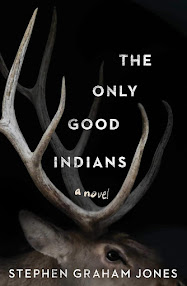
Horror: The Only Good Indians by Stephen Graham Jones
- American people
- Belief and doubt
- Elk
- Families
- Guilt
- Hunting
- Identity
- Indigenous men
- Indigenous peoples of North America
- Indigenous reservations
- Intergenerational trauma
- North American people
- Revenge
- Rural life
- Siksika (North American people)
- Tradition (Philosophy)
- Richly detailed
- Thought-provoking
- Unsettling
Week Six Prompt Response
Passive displays are an excellent way of appealing to almost every person who comes to the library. If they come to the library for books--rather than to print, for example--they are likely to take the time to examine an attractive display. I've often seen on social media "Blind Dates" with romance books. The books would be completely wrapped in pretty paper and bows. Only a small snippet of information would be visible on the paper, usually handwritten for that personalized feel. I think a cool variation of this would be to do it with horror novels.
I envision the horror novels would be wrapped in spooky, somber paper. Perhaps a nice black with gold accents. Bonus points for skulls or tombstones. Then, there could be notes attached to the books that hint at the theme, the monster, or the conflict. For instance, the book that I am going to annotate this week, Stephen Graham Jones' The Only Good Indians, follows four Blackfeet men pursued by the manifestation of their past mistakes. This book could be given a variety of notes to appeal to the reader...
- "Your mistakes are always watching." - theme
- "Ever been chased by an herbivore?" - monster (also kind of parodic)
- "Can we ever truly outgrow our childhood friends?" - conflict
- Gore
- Violence
- Animal death
- Guns
Tuesday, February 6, 2024
Week Five Prompt Response
I think the "review game" is multi-faceted. When I read reviews, I only put a lot of stock into them for my personal taste if the reader is someone who reads similarly to me. A lot of theme choices and stylistic differences could lead one reviewer to say that they did not enjoy the book, and they might leave a one star review. Some people review-bomb debut titles by authors whose personalities they don't enjoy, or with subject matter they find offensive. Platforms like Goodreads and Amazon are great for taking the general "temperature" of opinion on a book--but only if that book has lots of reviews so a kind of consensus can be reached.
Books that struggle to get reviewed, like self-published books, can have their debuts irreparably damaged by a few one star reviews. In the writing groups I'm in on Facebook and the like, there is at least a post a week by someone upset because a reviewer left a one star review of their book. (My personal opinion is that authors should not be reading the content of random reviewers to protect their mental health, and also because reviews are for readers, not authors, but I digress). The damage this does to a fledgling book could prevent it from getting into a library or bookstore in the future. Personally, I don't leave any reviews lower than three stars on Goodreads, but that's only because I know my taste is subjective and that a book might be someone else's favorite five star read. Genre conventions I don't enjoy might also influence how I would personally perceive a book for how frequent readers of that genre would see it. For instance, when I read It Ends with Us and It Starts with Us by Colleen Hoover. I rated those five stars because I think Hoover has a command of the contemporary romance genre, and writes well to her specific audience. Do I think they would be five star literary fiction? Of course not. But for readers of contemporary romance, I think they are five star.
My library has a generous collection development budget, and we will often purchase books with poor reviews if enough patrons request that title, or if that title is cheap enough to justify buying for one patron. We will often buy books by indie authors if a patron requests them. I do feel if a book is getting tons of positive press, we should be buying more copies of that than of random one star books, but those one star books might have an audience as well whose needs we can meet with those books.
In regards to reviews like that for Angela's Ashes, if I were in collection development, reviews like those done by Kirkus would sway my opinion more than that of "random" people. Not that the average person's opinion isn't valid. But sometimes people get nitpicky and enjoy tearing down popular TV shows, movies, books, video games, etc., just because they are popular. I don't necessarily think that's the case here with Angela's Ashes, though.
I think it's fair that some books are reviewed to death and others are not. That might be controversial, but I think we have to provide more reviews for popular books versus unpopular books. Not that those who are unpopular should never get a chance, but why should we have one hundred reviews for a book that's only sold one thousand copies? As the market shifts, the flow of reviews will cycle around to different genres and authors. As a writer, this reality does intimidate me for when I eventually pursue traditional publication, but I think writers find ways to adapt, such as through finding street teams to promote their books and giving out free ARCs to laypeople.
Kirkus Style Review: You Made a Fool of Death with Your Beauty by Akwaeke Emezi
You Made a Fool of Death with Your Beauty
By Akwaeke Emezi | Release Date: May 24, 2022
Searing, gorgeous prose couples with fierce ethical dilemma.
Five years after the traumatic death of her husband, young artist Feyi Adekola is still putting herself back together.Encouraged by her best friend Joy, Feyi seeks a meaningless physical connection with a man at a party. That moment of ecstasy and release catapults Feyi into a desperate search for meaning, echoed by Emezi's evocative mantra that Feyi is alive and she can deny herself joy no longer. Feyi believes herself to be on the precipice of a romantic love and an unveiling of her heart with a second man, Nasir. Nasir is patient and kind and everything a man should be--Joy encourages her to go for it. Indeed, Joy and Feyi's relationship is one of the true delights of the novel, bolstered as much by their shared background (both women are queer and the daughters of African immigrants) as by Emezi's touching dialogue that rings with authenticity and voice. This contemporary romance takes a turn for an ethical exploration when Feyi meets Nasir's father, Alim, and feels an instant soul-aching connection between the two of them. Feyi's rich inner voice coils and coils around itself with guilt. Nasir has just taken her on the vacation of a lifetime to his vividly described Caribbean island home, complete with a showcasing of her art at the local installation. What sort of woman, the narrative begs, falls for the father of the man who has given her so much? Emezi does not shy from this burning question, and tackles it with all the vitality of their main character, and the animal hunger of someone who has lived in darkness for too long.
Searing, gorgeous prose couples with fierce ethical dilemma.
Sunday, February 4, 2024
Secret Shopper Experience Summary
My secret shopper experience was not wholly good or bad. The employee working the circulation desk did not greet me when I entered the building as she was working on something at her computer. I browsed around for a bit and noticed the shelves were well-maintained and the displays were attractive. I noted to myself that if I were a patron who preferred to discover things on my own, this library would meet my needs. I eventually approached the circulation desk and asked if the employee could recommend me a good book.
The employee was welcoming in that moment and directed all of her attention on me. This did make me feel appreciated as a patron. She asked me what I usually like to read and I told her I enjoy science fiction and fantasy novels. Almost immediately, the employee seemed to get a little nervous and told me she doesn't read that genre. I thought she might turn to NoveList or Google, but she instead directed me to the appropriate place in the stacks. She pointed out how the books were labeled and showed me where new books versus older ones were. I thanked her.
I think this interaction would satisfy some patrons. Truthfully, if I were there as a patron and not as a student observing, I imagine this would have felt sufficient as I prefer to discover books on my own. However, if I were a patron who wanted a hands-on, personal feel, the interaction could have benefited from the employee asking me some follow up questions, such as inquiring what authors I've enjoyed reading in the past, what specific books I've loved, and going from there. This would have given a stronger impression that the employee cared about the outcome of the interaction and my experience as a patron.
Monday, January 29, 2024
Thriller: The Horsewoman by James Patterson & Mike Lupica (Late -- Sorry!)
- Mothers and daughters
- Olympic games
- Horses
- Competition
- Humans and horses
- Equestrians
- Equestrianism
- Olympic athletes
- Interpersonal conflict
- Fast-paced
- Compelling
- Suspenseful
Week Fifteen Prompt Response
Three ways that we promote our collection at my library are the following: 1. Themed book lists. I'm pretty sure every library under th...
-
Three ways that we promote our collection at my library are the following: 1. Themed book lists. I'm pretty sure every library under th...
-
Author: Akwaeke Emezi (they/them) Title: You Made a Fool of Death with Your Beauty Genre: Emotion (Romance) Publication Date: 2022 Number of...
-
1. I am looking for a book by Laurell K. Hamilton. I just read the third book in the Anita Blake series and I can't figure out which o...